

Blog - 11/05/2026
Types of Lift Technologies for Homes in India: Technical Comparison & Best Choice 2026
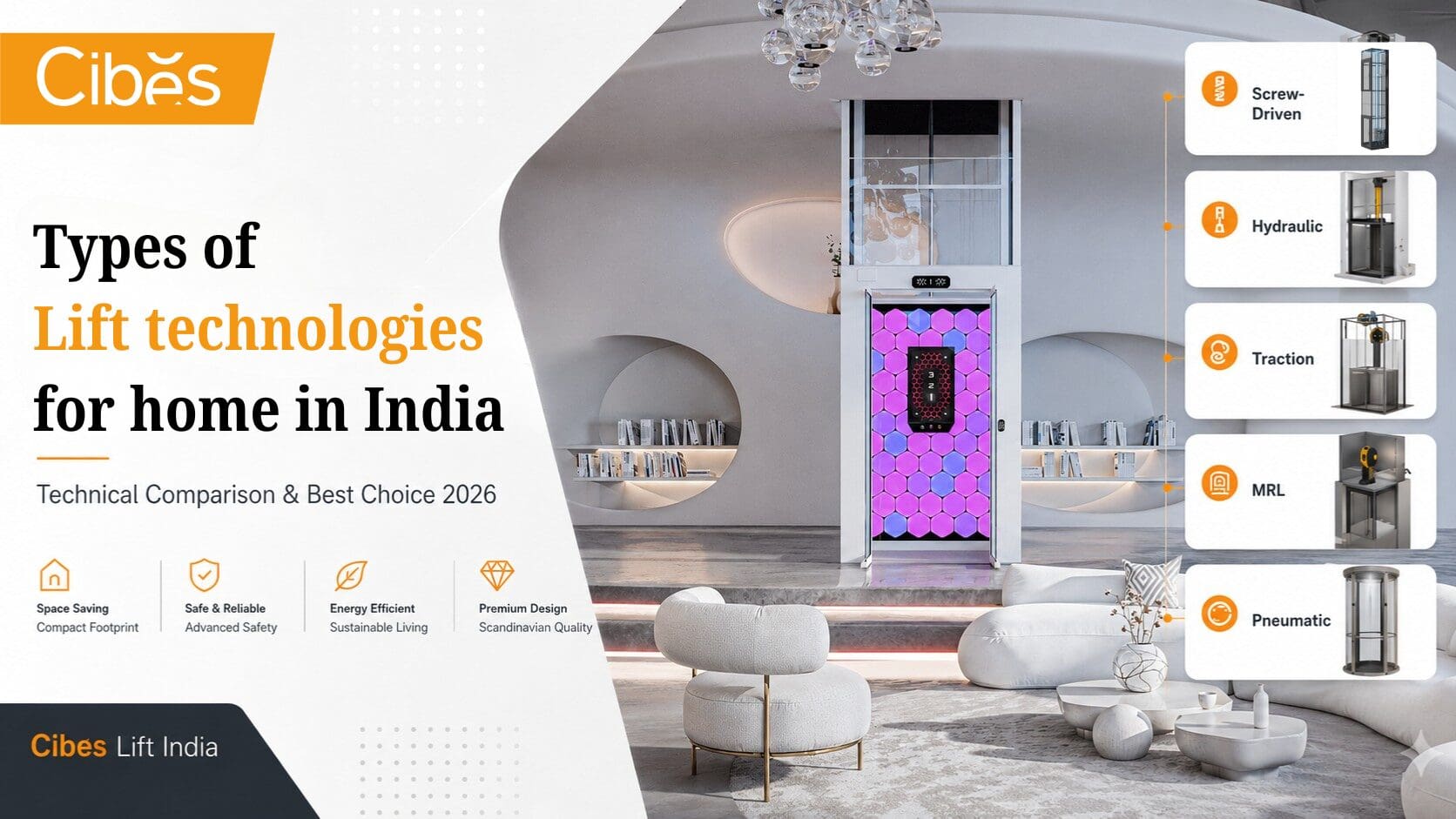
When families start planning a home lift, one question usually comes up quite early: which lift technology is actually right for our home?
That’s a fair question. Not every lift works the same way, and not every technology suits every house. Some lifts need more structural preparation. Some are better for retrofits. Some are chosen more for design flexibility, while others are picked for specific building conditions.
In this guide, we’ll walk through the main types of lift technologies used in homes in India, how each one works, where each one fits best, and what we think homeowners, architects, and builders should really look at before choosing.
TL;DR
There are five main types of lift technologies: hydraulic, traction, machine-room-less (MRL), pneumatic (vacuum), and screw-driven. Each works differently and suits different buildings, spaces, and budgets. For Indian homes and low-rise buildings, the most relevant options are screw-driven, hydraulic, MRL, and pneumatic lifts. Your best choice depends on your floor count, available shaft space, civil work budget, and how you want the lift to look and feel inside the home.
What does lift technology mean in a home lift?
Lift technology simply means the system a lift uses to move between floors.
That movement can happen through a screw and nut mechanism, ropes and counterweights, hydraulic fluid pressure, or air pressure. On paper, that may sound technical. In real life, it affects things homeowners care about much more directly, like whether a pit is needed, whether a machine room is required, how much structural preparation is involved, and how easily the lift can fit into an existing home.
That’s why the technology matters. It shapes not just how the lift works, but how easy or difficult the whole installation process may be for the home.
What are the five main types of lift technologies for homes?
The five main lift technologies commonly discussed for homes are:
- Screw-driven
- Hydraulic
- Traction
- Machine-room-less or MRL
- Pneumatic or vacuum lifts
Each one has its own strengths. None is automatically the right answer for every project. The better approach is to match the technology to the building and to the people who’ll use it every day.
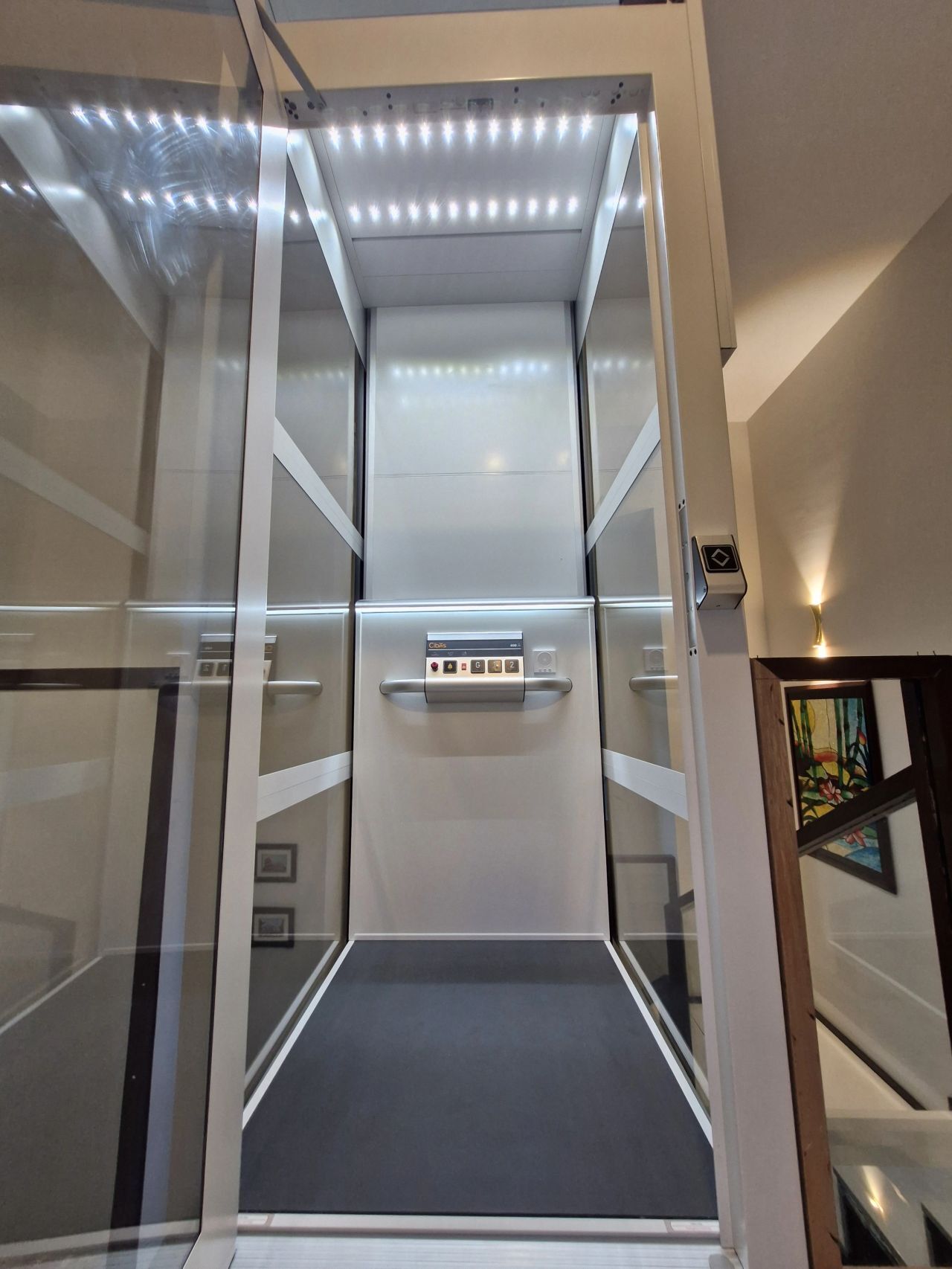
What makes Cibes Screw-Driven Lift technology different?
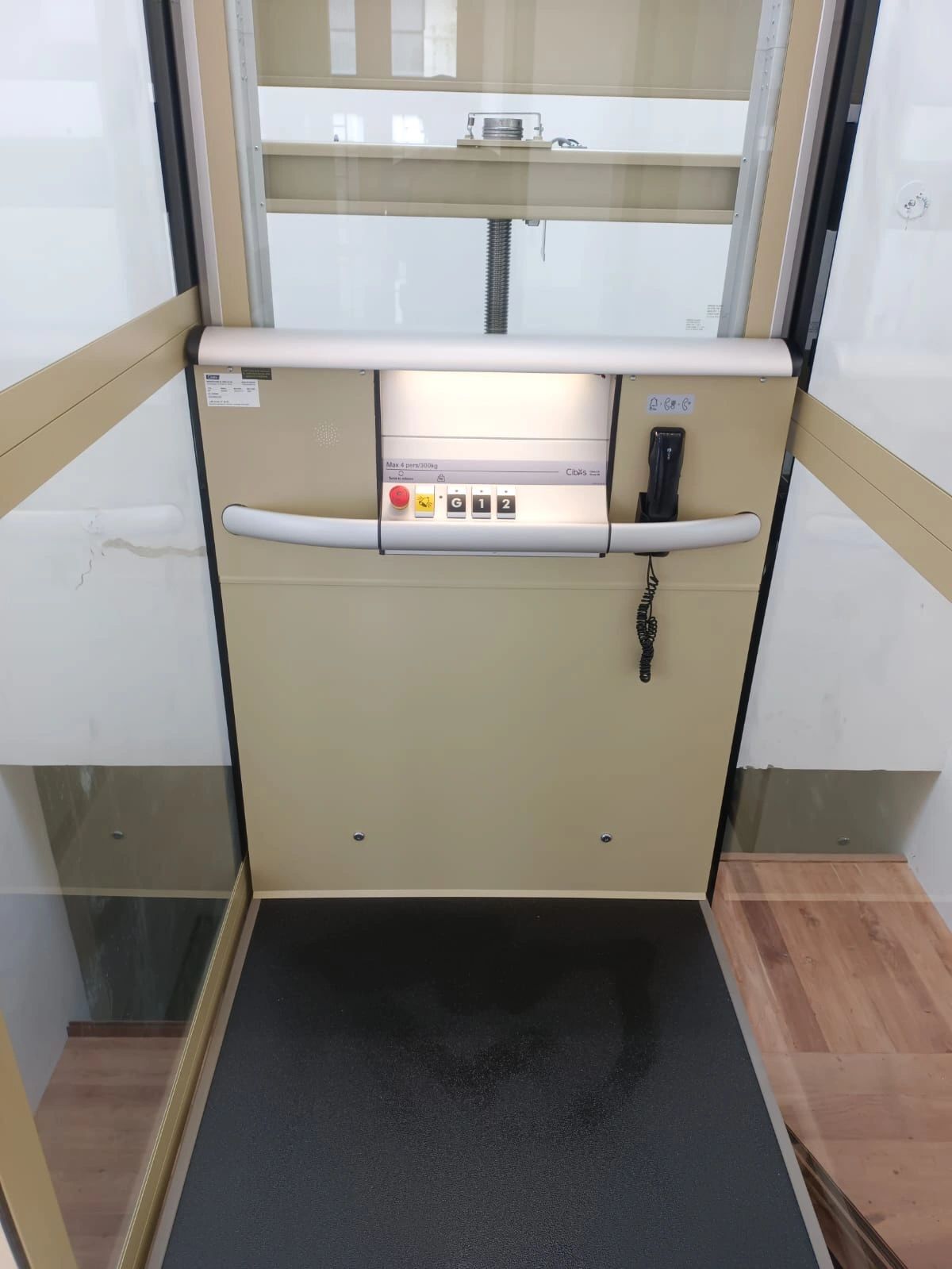
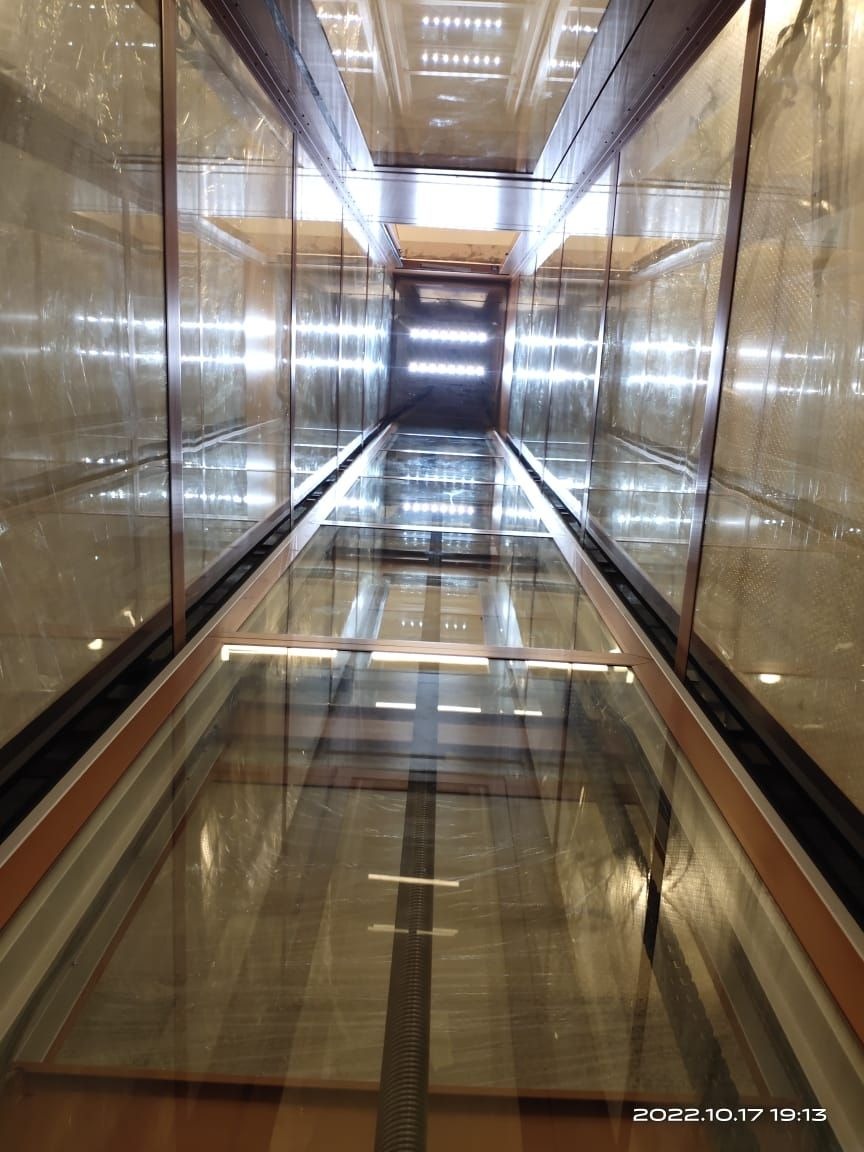
In screw drive technology, a threaded steel screw is mounted vertically on guide rails. The lift cabin connects to it through a drive nut. A motor belt turns the nut, and as it rotates, it moves smoothly and precisely up or down the screw.
What makes this important is that the nut never disengages from the screw. The system is designed to be mechanically self-locking. The lift cabin moves through continuous threaded engagement between the screw and drive nut, which is a core feature of this technology.
What sets it apart is how self-contained it is. There’s no need for a separate machine room, and in many cases, it can be installed with little to no pit. That makes it well-suited for existing homes where space is tight or structural changes are limited.
What is a Traction Lift, and where is it used?
Traction lifts operate using ropes or belts connected to a motor and counterweight. As the motor turns, the lift moves up or down. This is one of the most familiar lift technologies and is widely used across many building types.
In residential settings, traction lifts are often considered where there are more floors to cover or where a more conventional elevator format is being planned from the start. They are commonly associated with apartment buildings and commercial spaces, but they can also be used in some private homes, depending on the project design.
How does a Pneumatic (Vacuum) Lift work?
Pneumatic lifts, sometimes called vacuum lifts, are among the most visually distinctive on this list. They use a cylindrical transparent shaft and move the cab by creating a pressure difference above and below it. When the air pressure above the cab is reduced, the car rises. When it’s released, the car descends gently.
There’s no pit required, no machine room, and installation is relatively quick compared to other systems. This makes pneumatic lifts appealing for homes where structural changes need to be kept to a minimum, particularly in older or heritage properties.
They’re typically suitable for two to four floors and lighter loads. The cylindrical shape and glass construction can be quite striking visually, which appeals to homeowners looking for a design statement.
What is a Machine-Room-Less (MRL) Lift?
Machine-room-less lifts, or MRL lifts, are closely related to traction systems. The main difference is the motor placed inside the shaft itself, usually at the top. This removes the need for a separate machine room and saves significant space, which is one reason they’ve become popular in India’s mid-rise residential and commercial projects.
The trade-off is that servicing the motor requires access to the shaft, which should be considered during planning rather than a dedicated room setup. That said, improvements in MRL design have made this less of a concern with most modern installations.
How does a Hydraulic Lift work?
A hydraulic lift moves using a fluid-powered piston system. An electric pump forces hydraulic fluid into a cylinder, raising the car. When the lift descends, the fluid returns to the reservoir under controlled pressure.
These lifts are well known for their smooth start and stop, which makes the ride feel gentle and comfortable. They can handle heavier loads without difficulty, and the machinery is relatively straightforward to maintain.
In India, hydraulic lifts have been used widely in low-rise commercial buildings, small hospitals, and industrial settings. For homes, they’re a practical option where load capacity matters or where pit space is available. They often require a separate machine room and a pit, which should be factored into building planning.
For builders and architects working on space-conscious projects, MRL lifts offer a good balance between efficiency, travel height, and installation flexibility.
Which lift technology needs the least structural preparation in a home?
| Feature | Hydraulic | Traction / MRL | Pneumatic | Screw-Driven |
|---|---|---|---|---|
| Pit Required | Often required | Usually required for many models | Often not required | 100 mm or 0 mm |
| Machine Room | Often, the machine room is required | Separate room for traction, integrated arrangement for many MRL systems | No machine room required | No machine room required |
| Floors Suitable | Goes up to 6-7 floors | Up to 20 floors | Up to 5 floors | Up to 6 floors |
| Load Capacity | Depends on the model | Depends on the model | Often suited to lighter residential use | 350 – 400 kg |
| Installation in Existing Home | Depends on the shaft and civil requirements | May require more planning | Often suitable for retrofit projects | Often suitable, depending on layout |
| Ride Quality | Often described as smooth in low-rise use | Ride experience depends on model, installation, and building conditions | Often selected for compact residential use | Often preferred for controlled residential travel |
| Civil Work Required | May involve more structural preparation | May involve more structural preparation | May involve less structural work in some projects | May involve less structural work in some projects |
What Cibes Lift offers across these technologies?
We specialize in residential and light-commercial lift solutions built around screw-driven technology, with home lift options designed for Indian homes, villas, and low-rise buildings. Our solutions are often considered for projects where compact planning and residential integration matter.
Whether you’re planning a new villa in Bengaluru, retrofitting a duplex in Delhi NCR, or exploring options for a heritage home in Kolkata, we’d be glad to walk you through what makes sense for your project specifically.
How did one Bengaluru villa choose a practical home lift?
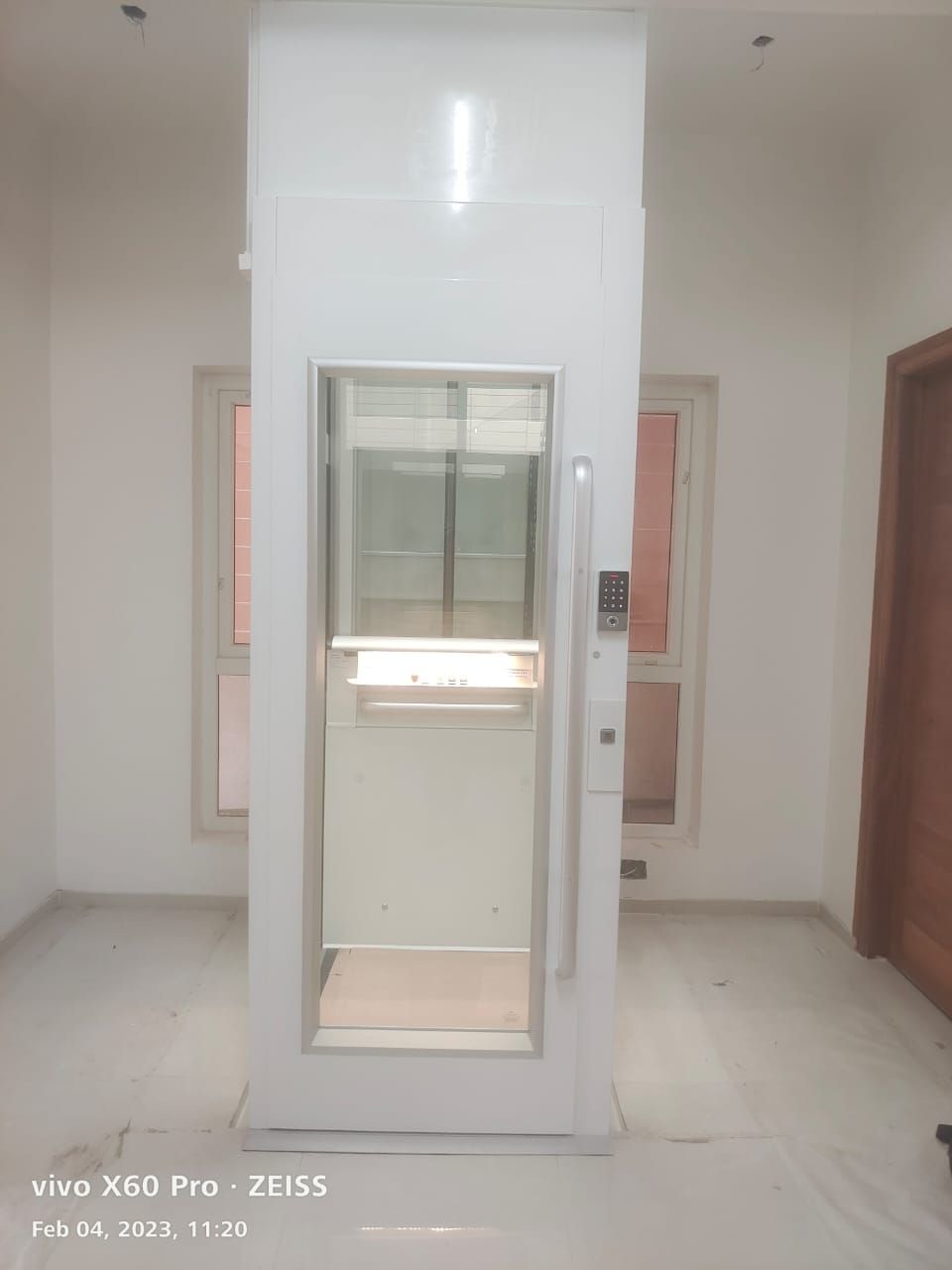
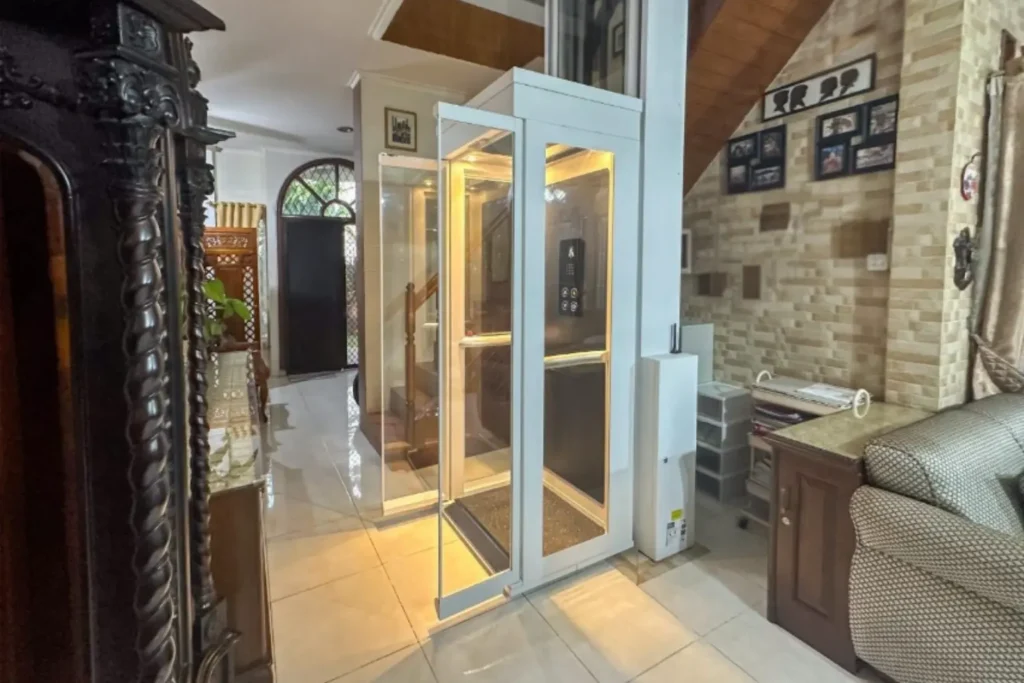
In a villa project in Bengaluru, the family needed a home lift for a G+1 layout, but the space available at the site was only 950 x 1150 mm. Within that limited area, the installed lift size was 930 x 1132 mm, which made the planning and fit critical from the start.
After reviewing the site dimensions and usage needs, the family chose Cibes Ascenda because it fit the available space without pushing the project into major structural changes. The selected lift size worked within the given cut-out while also supporting comfortable day-to-day use between floors.
For this project, the decision came down to two things: whether the lift could fit properly within the actual site constraints, and whether it would feel right inside the home. Cibes Ascenda answered both. The final installation used the available space efficiently, kept civil changes controlled, and gave the family a lift solution that suited the house in a practical and well-planned way.
Which lift technology is best for Indian homes?
There’s no universal winner when it comes to types of lift technologies. Hydraulic lifts have served the industry reliably for decades. Traction and MRL systems are the backbone of high-rise mobility. Pneumatic lifts bring something genuinely elegant to compact homes. And screw-driven systems, which we’re particularly close to, offer a practical and design-friendly answer for many Indian residential projects.
What matters is matching the technology to the building, the usage, and the people who’ll use it every day. That’s the right question to start with, and we’re always happy to help find the answer.
Frequently asked questions
Which lift technology is best for a duplex home in India?
For a duplex or low-rise private home, the best choice usually depends on space, shaft planning, civil work tolerance, and how the lift will be used. In many retrofit cases, screw-driven and pneumatic lifts are often seen as practical options.
Does a screw-driven lift need a pit or machine room?
Screw-driven lifts require either a 100 mm pit or 0 mm with a ramp in certain configurations, and do not need a separate machine room.
What is the difference between traction and MRL lifts?
Both are closely related, but an MRL lift places the motor inside the shaft, usually at the top, instead of in a separate machine room. That can save space, though servicing access still needs to be planned properly.
Which lift technology usually needs less civil work?
In many home retrofit situations, screw-driven and pneumatic lifts are generally considered the more retrofit-friendly options.
Which lift technology is best for a 2 or 3-floor house in India?
For a two to three-floor house in India, screw-driven and pneumatic lifts are the most practical options.
About the Author
Pintu Mahto is Technician Head at Cibes Lift India, with over 7 years of hands-on experience in elevator installation, site surveys, and safety commissioning. He writes to share practical knowledge from the field, covering home elevators, glass lifts, residential accessibility solutions, and the installation details that often get overlooked until something goes wrong.



Before installing a home elevator, ask the questions that really matter.
Space, safety, cost, installation, service, warranty, and design all play a role in choosing the right lift for your home.
Read the full blog by Cibes Lift India.
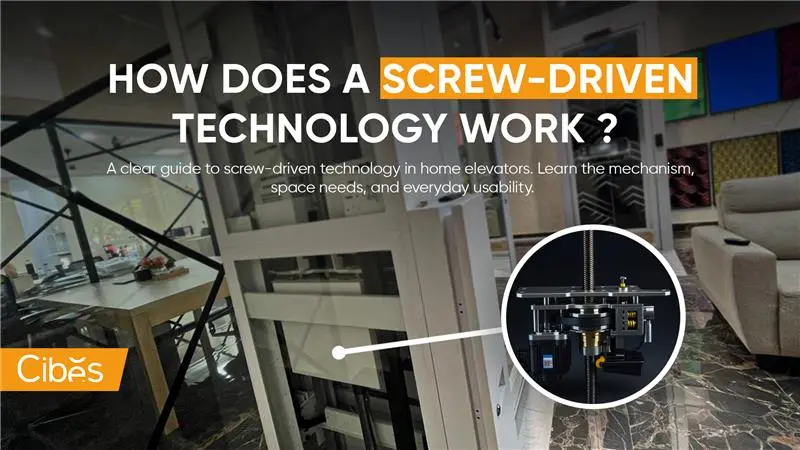
A screw-driven home lift works through a simple mechanical principle: a motor-driven nut travels along a fixed vertical screw shaft. The platform is attached to this nut, so as the motor turns, the lift moves up or down in a controlled path. When the motor stops, the platform stays in place on the shaft. If power goes out, the system’s response depends on whether your lift includes battery backup or emergency lowering support.

A home elevator can change the way a multi-level home feels every day. It makes movement between floors easier, helps with carrying daily essentials, adds comfort for the whole family, and brings a refined design touch to modern Indian homes.
In this blog, we explain 5 key advantages of adding a home elevator, from safety and convenience to long-term value and lifestyle comfort.

Planning a home elevator but not sure about the cost?
This guide explains the main factors that shape home elevator pricing in India, including technology, number of floors, site conditions, civil work, cabin size, and design choices.
Because the right lift is not always about the lowest price. It’s about safety, comfort, fit, and long-term ease.
Read the full blog by Cibes Lift India.
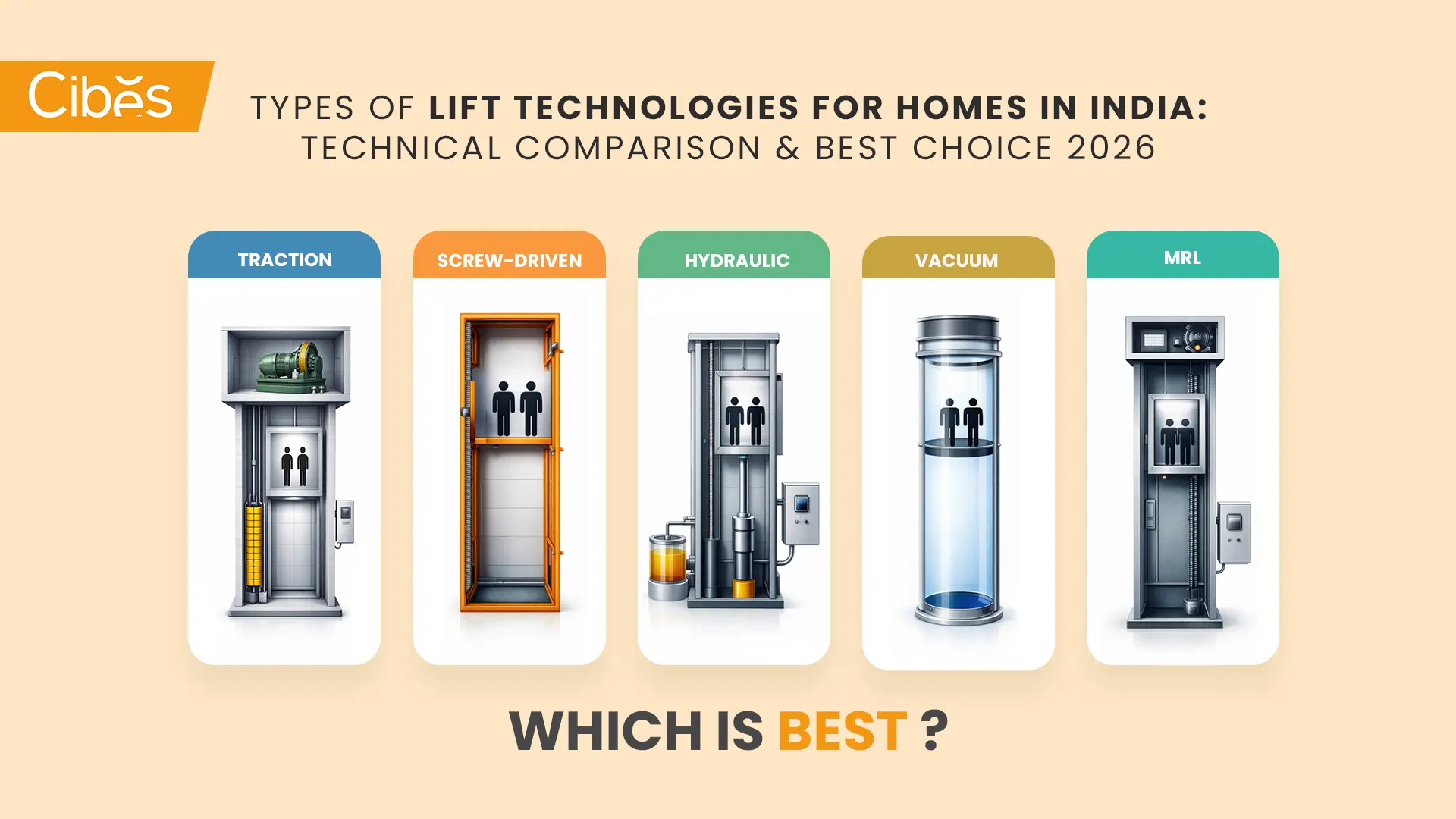
Choosing the right home lift starts with understanding the technology behind it. Our latest guide compares lift technologies for Indian homes in 2026, from space and safety to comfort and civil work. Read the technical comparison and see which option fits your home best. Request brochure and layout options today.

We offer lifts for any application, and regardless if you need a lift for your home, a school, an office, a hotel or a warehouse, we have the perfect lift model for you,a hotel or a warehouse, we have the perfect lift model for youa hotel or a warehouse, we have the perfect lift model for you
See all