

Blog - 15/05/2025
Home Lift Safety in India: What makes a home lift safe for your family?
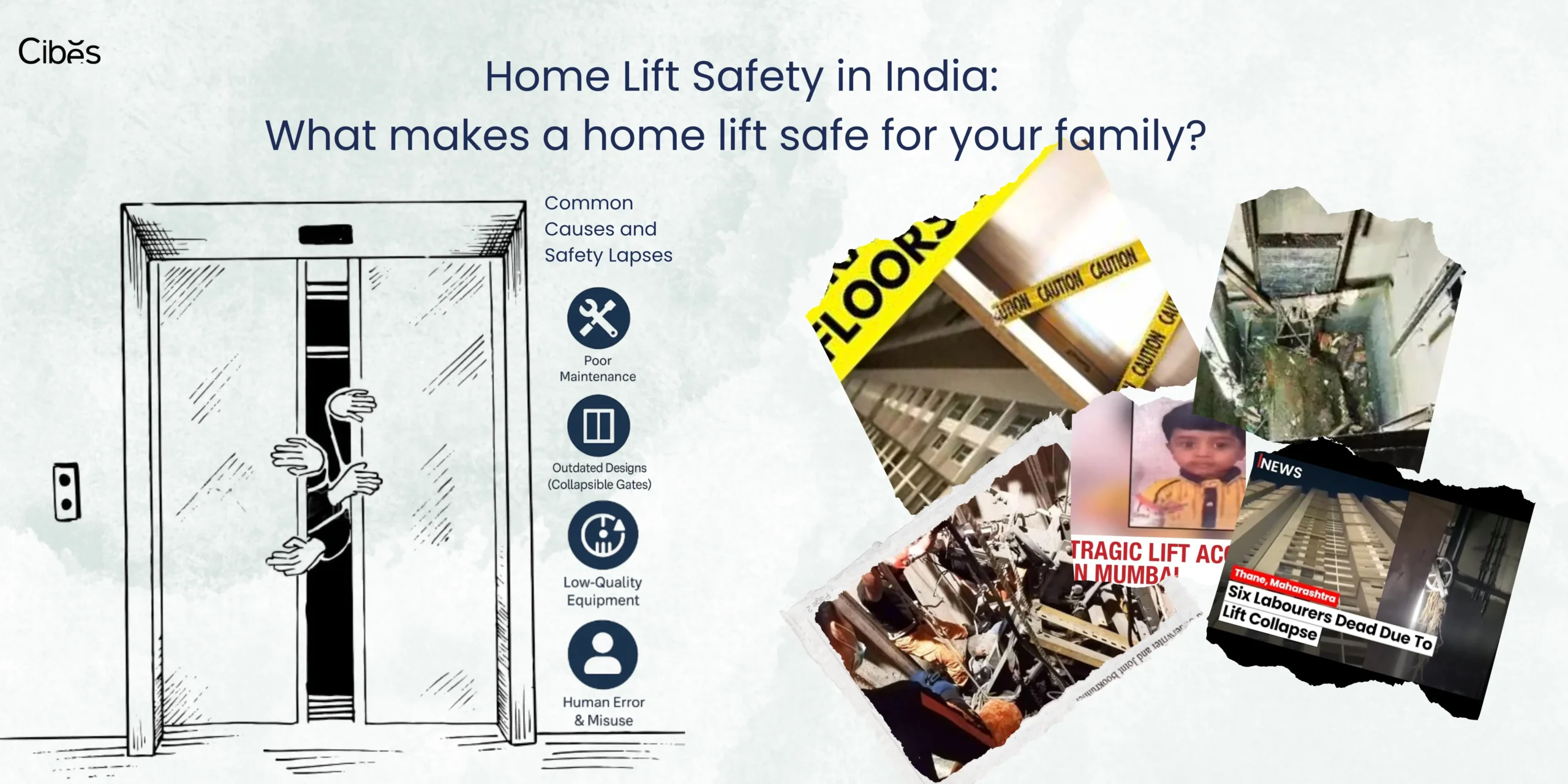
TL/DR
A safe home lift in India should include a secure drive system, automatic rescue during power cuts, door interlocks, overspeed protection, emergency communication, and regular maintenance support. For many homes, screw-driven lifts are preferred because they avoid cable-snap failures, require less civil work, and are designed for safer residential use.
Many homeowners in India choose a home lift for comfort, accessibility, and long-term convenience. But safety is the first thing that matters. A home lift is used by children, seniors, guests, and domestic staff. So the right question is not only how the lift looks but also how it behaves in real-life problems like power cuts, misuse, poor maintenance, or door faults.
This guide explains what home lift safety really means, what causes common lift accidents in homes, and what features you should check before buying a residential lift in India.
Why is home lift safety such a big concern in India?
Home lifts are becoming common in villas, duplexes, and premium residences across cities such as Bengaluru, Gurugram, Hyderabad, Kolkata, and Mumbai. At the same time, many accidents in residential settings happen because of old lift designs, weak maintenance habits, unsafe rescue attempts, and missing safety features.
A beautiful lift is not automatically a safe lift.
In many homes, buyers focus on cabin finish, glass design, or price first. Safety gets checked later. That is risky. A home lift should be chosen as a safety system, not just a decor element.
What do recent residential lift accident cases in India tell us?
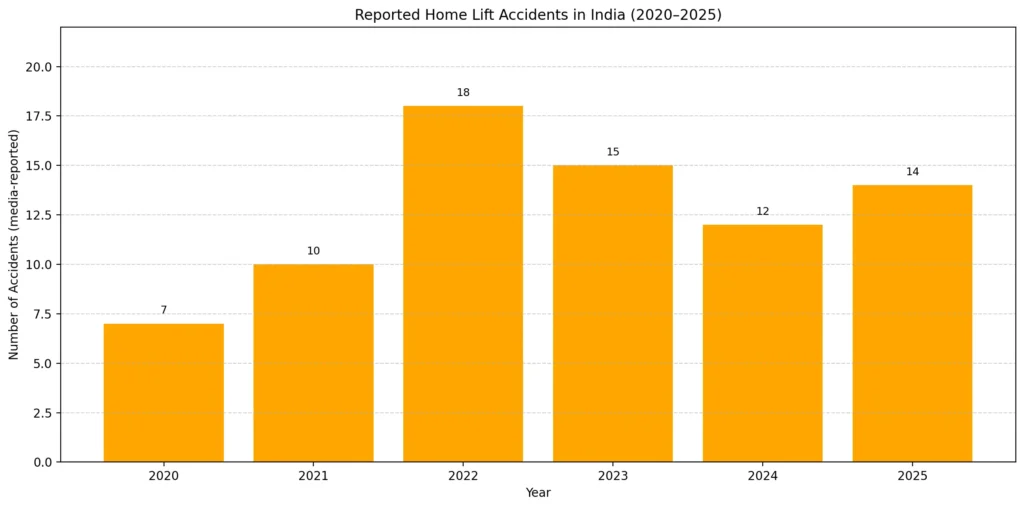
In the past few years, India has witnessed an increase in lift-related accidents in residential settings, highlighting the need for better safety. The chart below shows a comparison of reported home lift accidents per year from 2020 to 2025, based on media reports:
What notable home lift accidents have occurred in India in the past few years?
Several high-profile home lift accidents across India illustrate the various ways things can go wrong. Below are a few representative cases from news reports, highlighting the cause and outcome of each incident:
- Child Entrapment in Elevator Doors: In March 2025, a 4-year-old boy in Hyderabad was playing near an old-style lift with a collapsible gate when he got trapped between the grill door and the wall as the lift moved. The child suffered fatal injuries. A similar tragedy occurred in Mumbai’s Dharavi in November 2022, when a 5-year-old was caught between a wooden swing door and the metal grill of an aging elevator, resulting in his death. These cases underscore the danger of manual gate lifts around children.
- Fall Into an Open Shaft: In a shocking incident in Jaipur (October 2022), a 20-year-old man pressed the call button on his building’s lift, and the doors opened even though the car did not arrive. Unaware of the malfunction, he stepped forward and fell from the 11th floor down the empty shaft, suffering fatal injuries. Police investigations suggested a serious mechanical or installation fault that allowed doors to open without the elevator present. Similarly, a 9-year-old boy in Hyderabad died in 2019 after falling into a lift shaft from the 4th floor of his apartment building.
- Cable Snap and Free-Fall: A husband-wife pair of doctors in Kolkata were in their four-story home’s elevator in May 2023 when its cable snapped, sending the car plunging from the third floor to the ground. Both were critically injured. The elevator was only three years old, raising questions about the quality of installation and maintenance. In another case in a Hyderabad apartment (August 2024), a 65-year-old retired pharmacist fell to his death in the shaft when an elevator malfunction caused a free-fall.
- Lift Over-speed and Crash: In May 2023, residents of Noida society had a narrow escape when their elevator’s brakes failed. The lift shot upward uncontrollably and crashed through the roof of the top floor. Fortunately, no one died, but it raised serious concerns about missing or failed safety systems.
- Power Failure and Rescue Mishap: In July 2024, a 43-year-old housemaid in Kota got stuck in an elevator for 45 minutes during a power outage. People tried to help by forcing the doors open, but the rescue went wrong, and she fell. A proper automatic rescue feature might have prevented
These incidents do not mean every home lift is unsafe. They show that design choice and safety features matter a lot, especially in homes with children and elderly users.
Why do home lift accidents happen in India?
When we look at these incidents together, a few common reasons keep showing up.
- Poor Maintenance: Around 70% of lift accidents are due to poor upkeep. Worn-out cables, faulty brakes, and dead sensors result from skipped servicing. Many homeowners ignore maintenance to save costs, risking their lives in the process.
- Low-Quality Equipment: Smaller builders often use cheap, non-branded parts lacking essential safety features. Substandard door locks and poor installation practices lead to frequent malfunctions and accidents.
- Outdated Designs (Collapsible Gates): Old lifts with manual gates are major hazards, especially for children. Unlike modern doors with sensors, these can operate even if someone is in the way. Tragically, many kids have been injured or killed by these outdated models.
- Missing Safety Mechanisms: Many lifts lack overspeed governors, auto-braking systems, or power backups like ARD. Their absence has led to crashes, free falls, and people getting stuck during power failures.
- Human Error & Misuse: Unsafe behaviors like forcing doors, overloading, or allowing kids to play near lifts contribute to 30% of accidents. Misuse can damage safety sensors over time, leading to failures.
What safety features should you check before buying a home lift in India?
If you are comparing home lifts, check these safety features first. This section matters more than cabin color, panel finish, or brochure claims.
What are the essential safety features of a home lift?
| Safety Feature | Why It Matters |
|---|---|
| Door interlocks | Prevents the lift from moving unless doors are properly closed and locked |
| Automatic Rescue Device (ARD) / battery backup | Helps the lift move to a safe floor and open doors during a power failure |
| Overspeed protection and braking system | Helps stop unsafe movement if speed exceeds safe limits |
| Obstruction sensors/door safety sensors | Reduces injury risk if something blocks the door path |
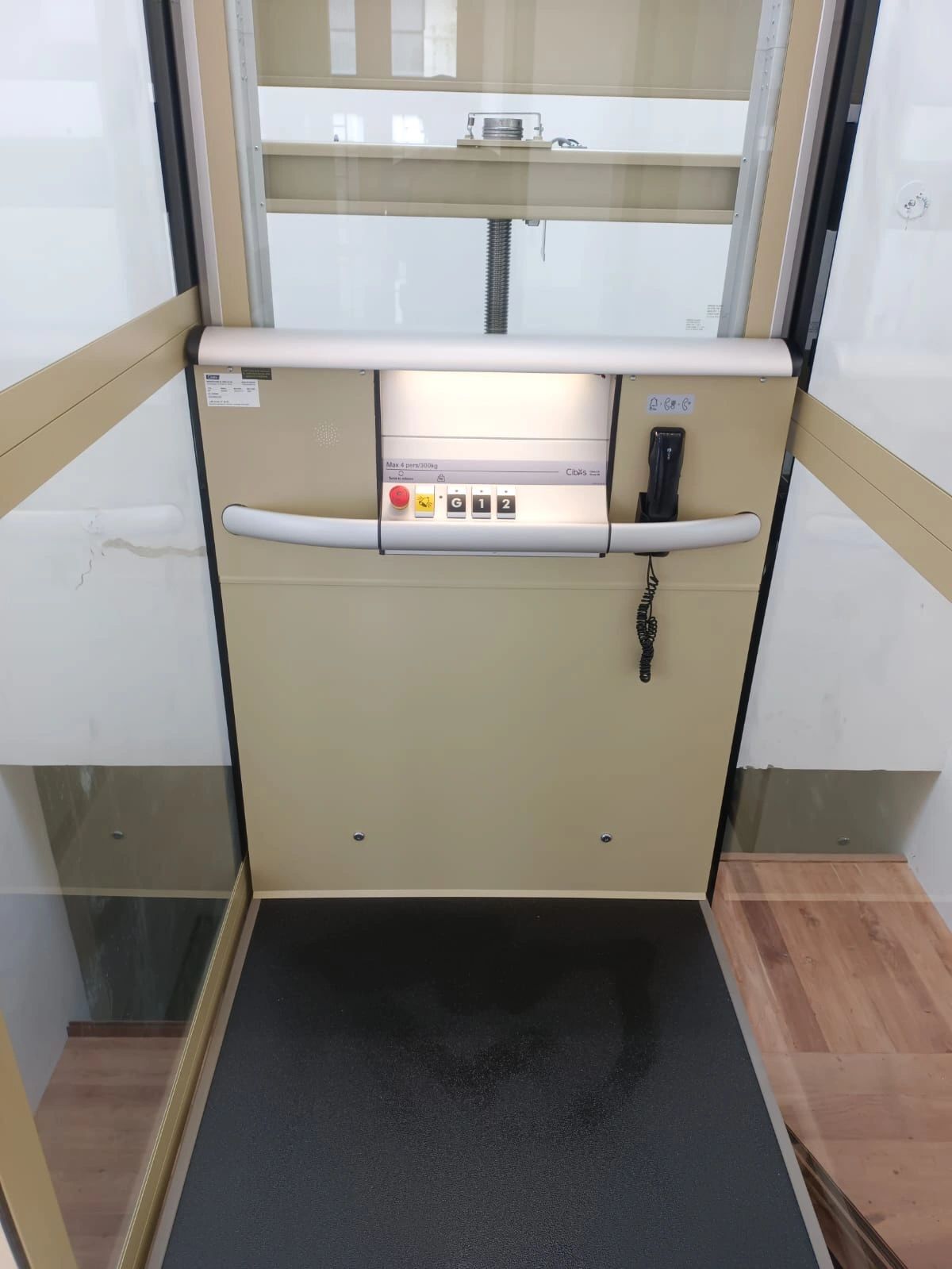
| Emergency alarm/intercom / GSM communication | Let passengers call for help if they are stuck |
| Reliable drive system designed for residential use | Reduces risk from common failure modes seen in older lift systems |
| Smooth start-stop control | Improves balance and comfort for seniors and children |
| Certified installation and regular maintenance support | Safety depends on setup and servicing, not just the machine itself |
If a seller cannot clearly explain these features, ask again. If they avoid the question, that is your answer.
Are screw-driven home lifts safer than cable lifts for residential use?
For many home applications, screw-driven lifts are considered a safer and more practical choice, especially in villas and existing homes where space, civil work, and maintenance are major concerns.
Why? Because the mechanical design is different.
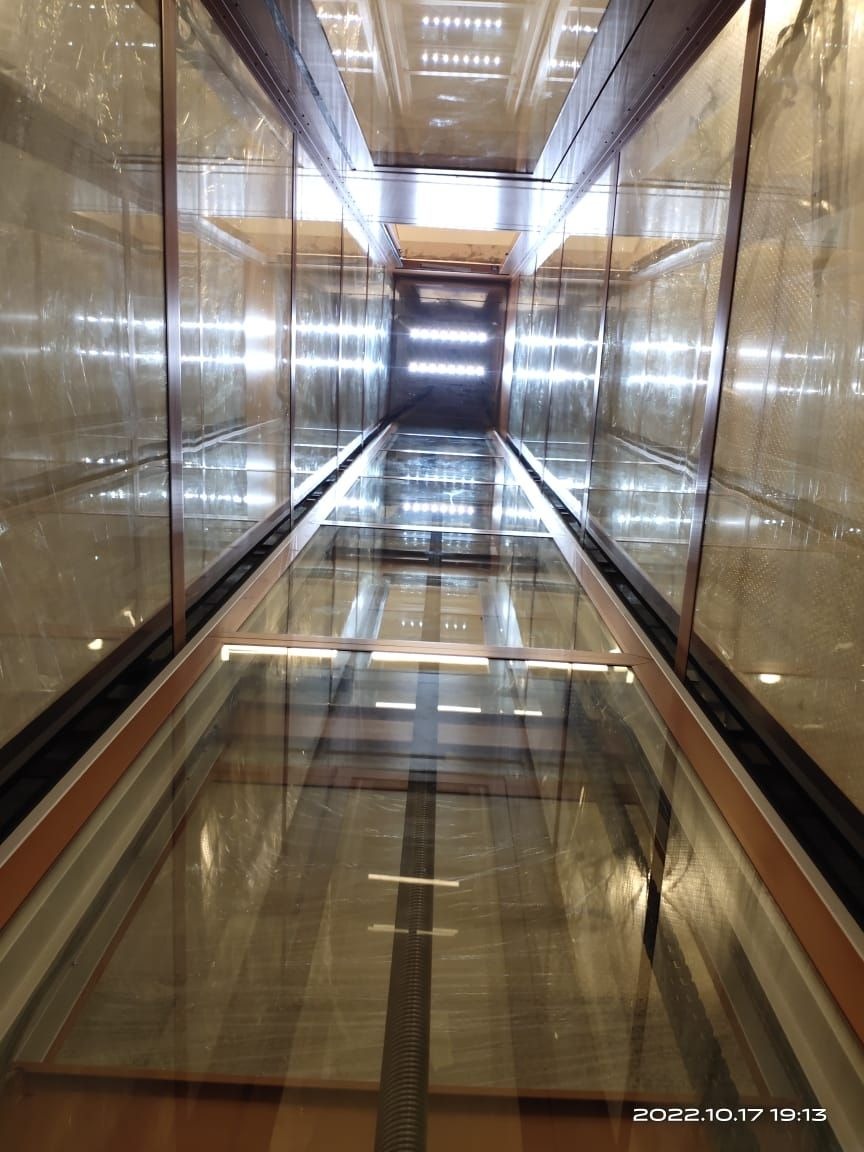
In a typical cable-based lift, the cabin movement depends on suspension components and counterweight systems. The screw-driven elevator moves using a smart mechanical system built for safety and control. At its core is a threaded steel screw, suspended at the top of the guide rails, with the lift cabin connected through a drive nut.
The motor drives this nut through a belt, causing it to rotate along the screw and move the cabin smoothly up or down. Since the nut remains continuously engaged with the screw at all times, the possibility of free fall is greatly reduced.
Cibes screw-driven vs standard cable lift (residential safety comparison)
| Safety / Use Factor | Cibes Screw-Driven Home Lift | Standard Cable-Based Residential Lift |
|---|---|---|
| Drive principle | Screw-and-nut drive system | Suspension cable / traction-based movement |
| Cable snap scenario | No suspension cable is involved | Cable condition is a critical safety and maintenance factor |
| Pit requirement | No deep pits are required | Often needs a pit and more civil preparation |
| Machine room | No separate machine room is needed | May require a machine room or additional equipment space |
| Power cut behavior | Can include battery backup and ARD for safe landing | Depends on system design and installed rescue setup |
| Residential retrofit suitability | Strong for existing homes with limited structural changes | Can be harder in retrofit projects due to the shaft and civil needs |
| Maintenance burden | We need one maintenance per year | Maintenance quality is critical, especially for cables, brakes, and door systems |
This does not mean every cable lift is unsafe. It means homeowners should compare the actual safety architecture, not just price or appearance.
What makes Cibes home lifts a safer choice for luxury homes in India?
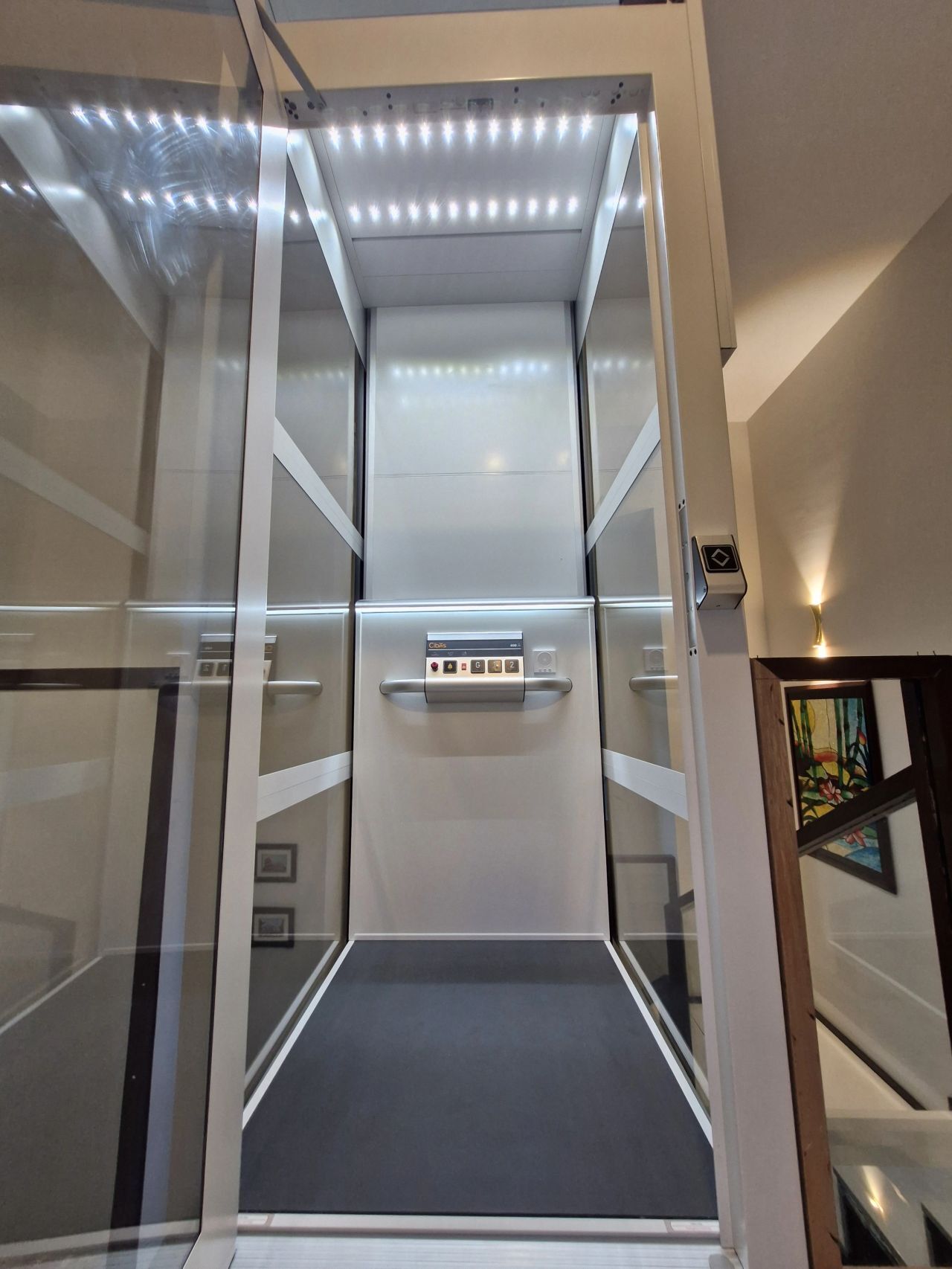
Cibes home lifts are often chosen in premium homes because we combine residential safety engineering with low structural disruption. That matters a lot in occupied homes, renovation projects, and architect-led villas where safety and design both matter.
Here are the core reasons homeowners and architects consider Cibes for home lift safety:
1) Screw-driven technology for residential use
We use a screw-driven system designed for home lifts. This helps avoid cable-related residential failure concerns and supports smooth movement in compact homes.
2) No deep pit and no machine room (in many home applications)
This reduces major civil work and lowers the risk linked to poorly executed shaft construction in home projects. It also helps in retrofit situations where space is tight.
3) Power-cut safety with ARD and backup systems
During a power cut, the lift can be configured to move to a safe level and open the door, reducing entrapment risk and panic.
4) Door safety and interlocks
Modern door protection and interlock systems help prevent lift movement when doors are not safely closed.
5) Certified safety standards
Cibes home lifts are associated with internationally recognized safety standards such as EN 81-41 for platform lift applications. This gives architects and homeowners a stronger technical basis for comparison.
6) Expert Installation Across India
With showrooms in Gurugram, Kolkata, and Bangalore, Cibes offers professional installation and AMC support, ensuring genuine parts and reliable service.
Cibes’ track record also speaks volumes: over 60,000 Cibes lifts installed worldwide without major safety issues. This global experience is now benefiting Indian customers who can get the same world-class safety in their residences.
What safety features matter most for elderly parents and children?
If your home lift will be used by seniors or children, focus on these points first:
- Easy entry and exit with stable floor leveling
- Smooth ride quality with controlled start and stop
- Door sensors and interlocks
- Emergency communication button
- Power-cut rescue function (ARD)
- Clear cabin lighting and controls
- Trusted maintenance support with scheduled service visits
For elderly users, comfort is part of safety. Sudden jerks, leveling mismatch, or confusing controls can become a real risk.
Does a safe home lift need a pit or machine room?
Not always.
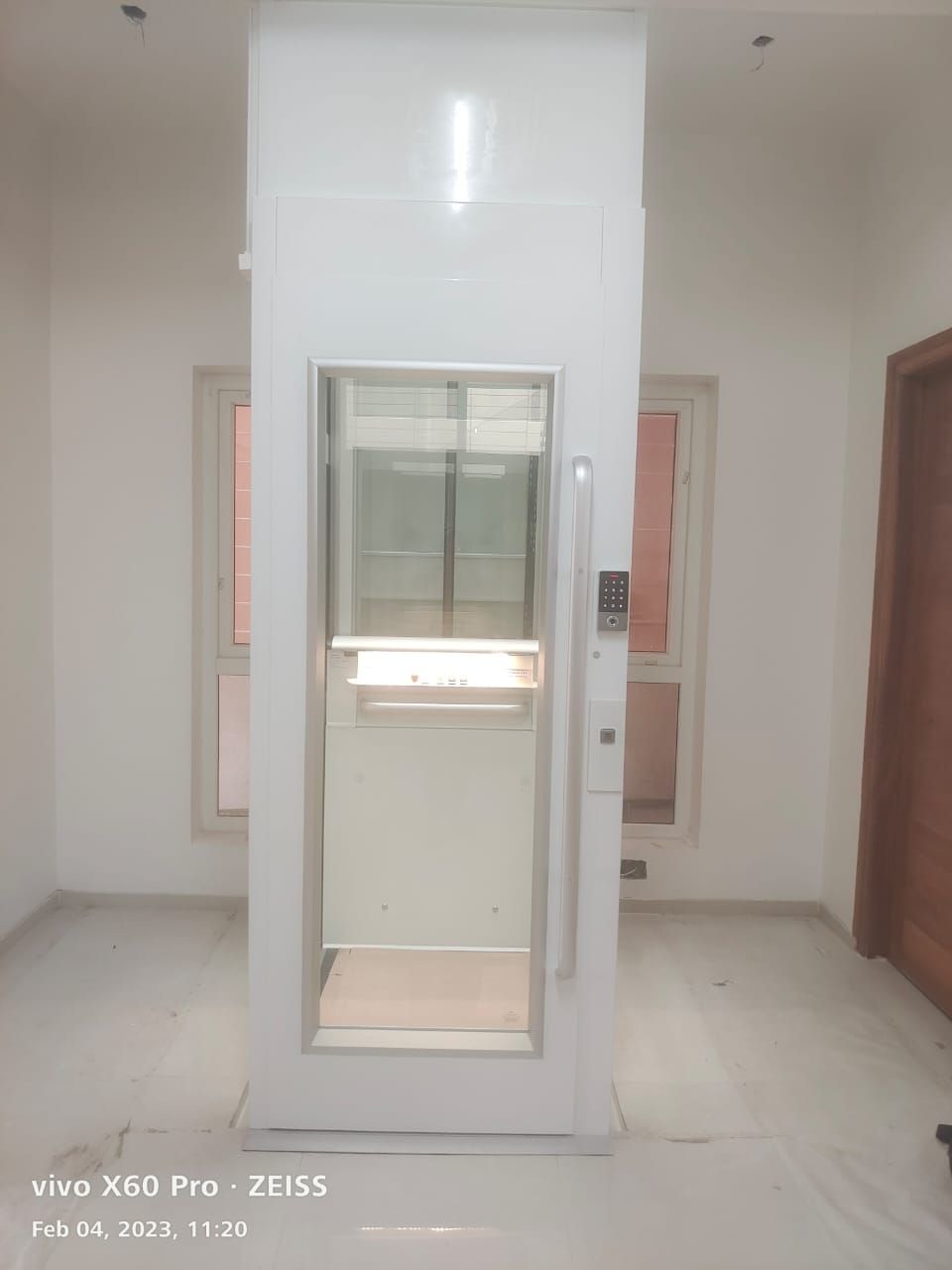
Many modern home lifts, including screw-driven models, are designed to work without a deep pit or separate machine room. This is one reason they are popular in villas and retrofit homes in India.
That said, every property is different. A site survey is still important because ceiling height, floor opening, and available footprint affect what can be installed safely.
Can glass home lifts be safe?
Yes, if the lift is engineered correctly and built with proper safety components.
Glass design does not make a lift unsafe. Poor engineering does.
A safe glass home lift should include:
- Certified structure and drive system
- Safe door operation and interlocks
- Correct glazing specification for lift application
- Stable installation and professional commissioning
- Periodic maintenance checks
At Cibes, we use toughened laminated glass, which contains a protective interlayer that holds the glass together even if it cracks, preventing dangerous scattering and reducing injury risk.
For luxury homes, glass lifts are often preferred because they improve openness and natural light. Safety depends on the full system, not just the cabin material.
Is a Cibes home lift right for every property?
Not every lift fits every building. A good safety guide should say that clearly.
A Cibes home lift is often a strong fit for villas, duplex homes, and residential retrofit projects. But final suitability depends on site conditions and use requirements.
Here are a few practical points to check before purchase:
- Available floor area and ceiling height
- Number of stops/floors required
- User profile (elderly, wheelchair use, children)
- Load requirement
- Indoor vs semi-outdoor installation
- Power backup expectations in your area
- Maintenance access and AMC support
If your project is a high-rise commercial building, factory, or heavy-duty public-use setup, a different lift category may be more suitable.
How can homeowners keep a home lift safe after installation?
Even the best lift can become unsafe if maintenance is ignored.
Use this simple safety routine:
1) Follow scheduled maintenance
Do not delay service visits. Small faults become dangerous when ignored.
2) Do not force doors
If a door is stuck, do not pry it open. Call service support.
3) Teach children basic lift safety
No playing near doors. No blocking doors. No riding alone if too young.
4) Avoid local repairs by untrained technicians
Use authorized service teams for inspection and repairs.
5) Test emergency communication and backup function periodically
Make sure the family knows what to do during a power cut.
6) Keep the area around the lift clean and dry
A cluttered or wet landing area increases fall risk, especially for seniors.
What should you ask a home lift company before buying?
Ask these direct questions and expect direct answers:
- Which safety standard does this model follow?
- What happens during a power cut?
- Does it have ARD and battery backup?
- What door safety features are included?
- What maintenance schedule is required?
- Who installs it and who services it later?
- Is it suitable for children and elderly users?
- Does it need a pit or a machine room?
- Can you show a real installation in India?
If a company only talks about looks and price, you are not getting the full picture.
Common Questions about Home Lift Safety in India
1. Which is the safest home lift technology in India?
For many residential homes in India, screw-driven lifts are considered one of the safer options because they are designed for home use, can work without heavy civil changes, and include safety systems like ARD, door interlocks, and emergency controls.
2. What makes Cibes Home Lifts safer than traditional lifts?
Cibes uses screw-driven technology, eliminating the risk of free fall. Unlike cable lifts, the lift is threaded on a steel screw, making it inherently safer. It also includes backup systems, door sensors, and certified quality standards.
3. Are Cibes lifts safe during power failures?
Yes, all Cibes Home Lifts come with a battery backup system and automatic rescue device (ARD), allowing the lift to safely descend to the nearest floor during a power outage.
4. What are the common causes of home lift accidents in India?
The most common causes include poor maintenance, use of low-quality or unbranded parts, outdated designs (like collapsible gates), and human error or misuse.
5. What safety features should a home lift have?
✔ Overspeed protection
✔ Obstruction sensors
✔ ARD (Automatic Rescue Device)
✔ Screw-driven mechanism
✔ Certified installation
Cibes offers all of the above.
How do you choose the safest home lift for your home in India?
If you are planning a home lift in India, start with safety, then compare design and finish.
The right home lift should protect your family during normal use and during unexpected situations like power cuts, user error, or delayed maintenance. For many luxury homes and villas, screw-driven home lifts offer a strong combination of safety, space efficiency, and low-disruption installation.
Choose a lift that is built for homes, installed by trained professionals, and supported with proper maintenance. That is what long-term peace of mind really looks like.
Looking for a safer home lift for your villa or duplex?
Talk to the Cibes Lift India team for a site assessment and model recommendation based on your floor plan, family needs, and safety priorities.
About the author
I’m Pintu Mahto, Technician Head at Cibes Lift. I’ve spent 7+ years working on elevator installations, with hands-on experience in site surveys, coordinating installation teams, checking site readiness, supporting alignment and fitment, managing wiring and control setups with other trades, and ensuring installations are completed with proper safety checks. I write to share what really matters on-site, from installation planning and safety checks to practical tips that help avoid delays and rework. My focus areas include home elevators, glass lifts, and residential elevator setups, along with accessibility solutions and smart home mobility features that improve everyday use.


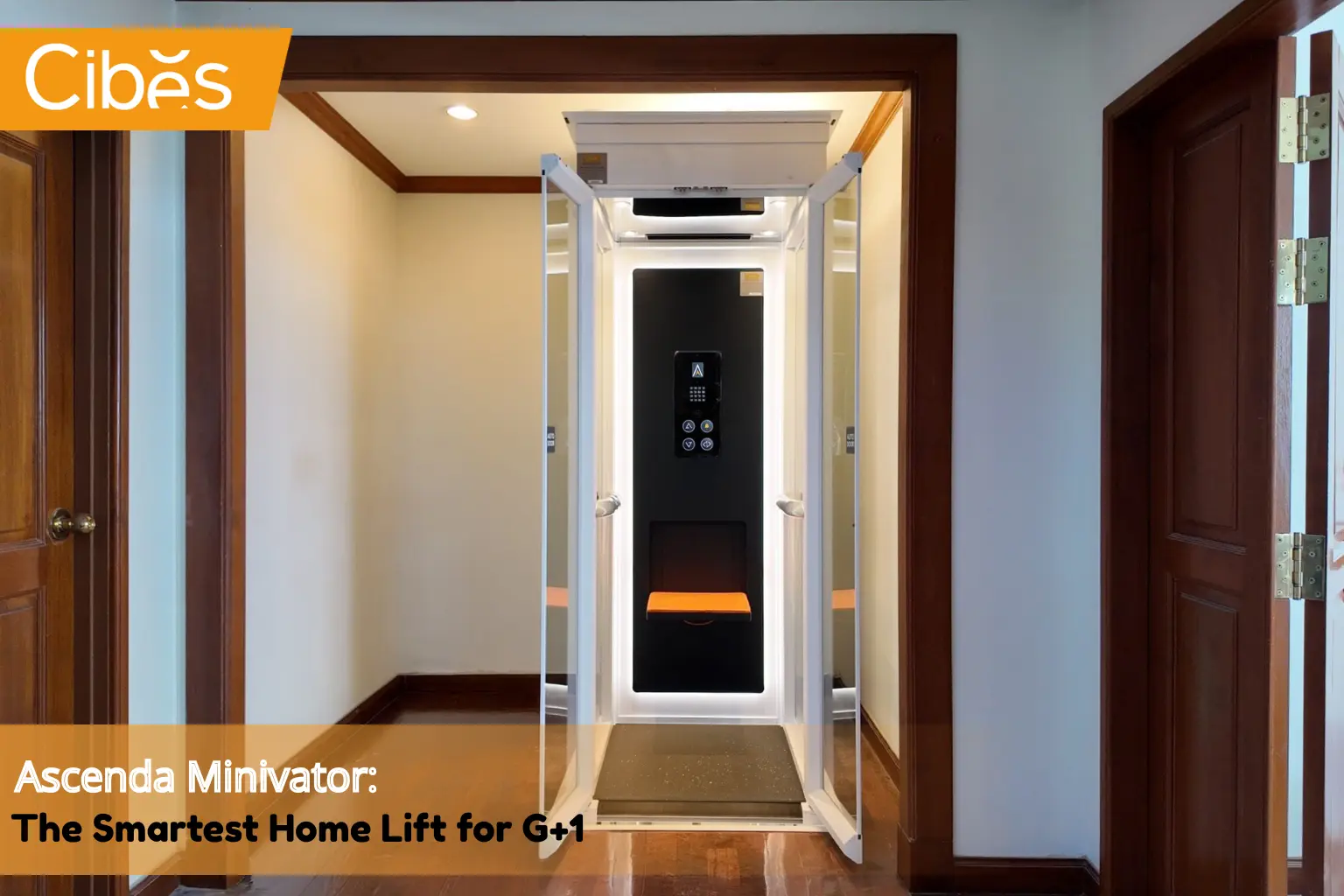
Experience effortless movement in your two-storey home with the Ascenda Lift for G+1. Designed for safety, comfort, and modern living, Ascenda brings pitless installation, all-glass elegance, and advanced features that transform everyday mobility. A perfect upgrade for families seeking convenience and long-term reliability.

The real lift cost in 2025 goes beyond the price tag. Cheap lifts may save money upfront but compromise safety, quality, and durability. Premium lifts like Cibes offer superior engineering, energy efficiency, and long-term value, making them the smarter investment for homeowners seeking safety, style, and reliability.
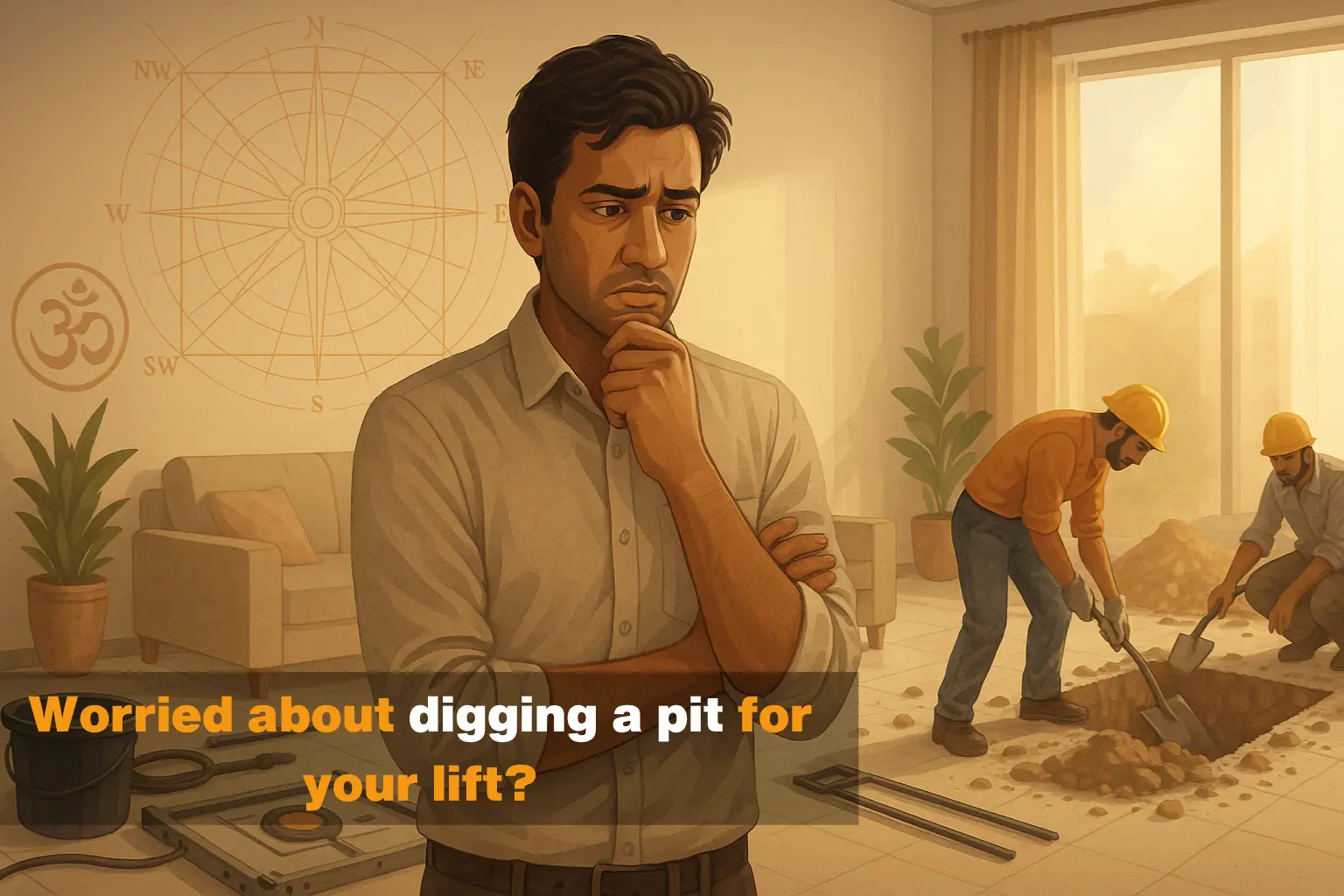
Experience true harmony with Cibes pitless lifts, a Vastu-friendly solution that preserves your home’s balance, avoids deep digging, and brings effortless comfort with modern elegance.

Step into Cibes Lift India – Bengaluru Showroom, where luxury meets safety. Explore premium home lifts crafted for villas, duplexes, and bungalows with unmatched comfort.

Discover Cibes Lift India – Gurugram Showroom, showcasing the safest and most luxurious home lifts. Perfectly designed for villas, duplexes, and bungalows to blend elegance with comfort.

We offer lifts for any application, and regardless if you need a lift for your home, a school, an office, a hotel or a warehouse, we have the perfect lift model for you,a hotel or a warehouse, we have the perfect lift model for youa hotel or a warehouse, we have the perfect lift model for you
See all